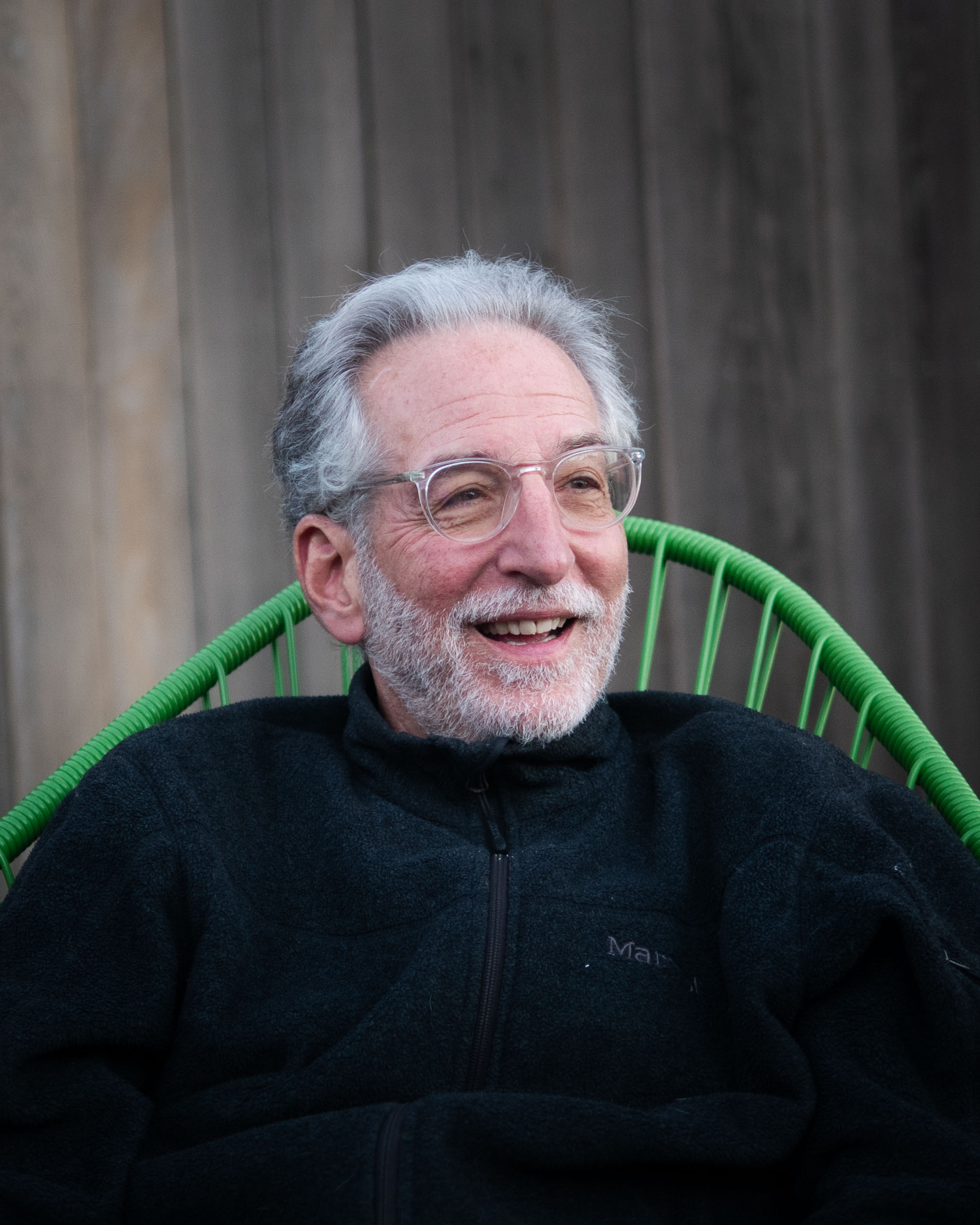
Early Life, Education and Occupation
I grew up outside of NYC, spending lots of time working with my two brothers in our family’s luncheonette in Manhattan’s garment center. For reasons I never understood, at a very early age I set my eyes on attending West Point, the US Military Academy, even though it wasn’t a career as a soldier that interested me; it was a patriotic ambition. But once admitted, I decided instead to attend Georgetown University’s School of Foreign Service. But when that proved insufficiently interesting, I found myself in an identity crisis: Who was I? What was I to become? By sheer luck, I was steered to volunteer at the university hospital day care center--which changed my life.
I decided I wanted to be a nursery-school teacher--to light a candle rather than curse the darkness--and transferred to Vassar College because it had a nursery school on campus. The study of psychology there led me to pursue a Ph.D. in human development at Cornell, which then led to my first job at Penn State University in 1978. After 21 years there--and having raised two sons to manhood (one who has produced 2 grandchildren)--I moved to London to another academic job in 1999 where I served as founding Director of the Institute for the Study of Children, Families and Social Issues and Professor of Psychology at Birkbeck University of London.
A dozen years there led to another dozen at the University of California, Davis and an endowed chair in 2011 before retiring in 2022. I now reside in northern California, right on the rocky coast facing the Pacific Ocean.
Scholarly Work
Throughout my 40+ year career my work has focused on the effects of childhood experience on later development. I studied early family life, including how marriages change across the transition to parenthood; the origins of infant-parent attachment security; and the influence of mother- and father-child relations on children’s development, beginning in the first year of life, as well as the effects of day care and the etiology of child abuse and neglect.
I was a founding and collaborating investigator on the $150 million NICHD Study of Child Care and Youth Development (US) and later the Research Director of The National Evaluation of Sure Start (UK). By mid-career, my focus turned increasingly to the study of evolutionary-developmental (evo-devo) psychology, advancing and testing novel hypotheses which are the focus of my new book, The Nature of Nurture: Rethinking Why and How Childhood Adversity Shapes Development.
My research was funded in the U.S., by grants from the National Science Foundation, the National Institute of Mental Health, the National Institute of Child Health and Human Development, the March of Dimes Foundation and the Sara Scaife Family Foundation. In the U.K., it was funded by The Welcome Trust and the government’s Department for Education and Skills.
I served as a consultant to Vice President Gore on the issue of work and families, attending the White House Conference on Child Care. In the UK I served as consultant on matters of child care and early child development to the Office of the Prime Minister, the Treasury, the Department for Education and Skills/Children, Families and Schools and the committee of the House of Commons overseeing this department.
Professional Honors and Standing
In 1983 I was awarded the Boyd McCandless Award for Distinguished Early Contribution from the Developmental Psychology division of the American Psychological Association and in 2007 the American Psychological Association’s Urie Bronfenbrenner Award for Lifetime Contribution to Developmental Psychology in the Service of Science and Society.
In 2010 I became a member of the Academy of Europe. In 2014 I was named among the 200 Eminent Psychologists of the Modern Era (Archives of Scientific Psychology); in 2015 I was listed among the top 100 “Greatest Living Behavioral and Brain Scientists” based on citation analysis; in 2016/17/18 I was designated a “Highly Cited Researcher” by the Web of Science, being among the top 1% of scholars cited in the fields of psychiatry and psychology; and in 2019 and 2025 was among the top 0.01% of all scientists (6.9 million) based on impact (PLoS Biology, Ioannidis et al.), as well as being listed among the top 10 cited developmental psychologists in the world.
ScholarsGPS also listed me as the most cited scholar in the field of Ecology-Evolutionary Biology. Google Scholar has my work cited in excess of 125,000 times, yielding an H index of 172.